
Yes, a roof can be replaced in the winter in Maine when it truly can’t wait, but for a planned replacement, late May through early October is the better choice. Cold weather changes how shingles seal, how membranes stick and how long every step takes.
Below, we’ll explain what cold does to a new roof, how metal and flat roofs handle winter work, when a winter roof replacement in Maine makes sense, and what to do if your roof needs help before spring.
Why cold weather is hard on a new roof
Asphalt shingles are made to seal themselves to the row below, and that seal needs warmth. In a Maine winter, it may not happen until spring.
Each shingle has a strip of sealant along its underside. The sun’s heat activates it, bonding the shingle to the course beneath so wind can’t lift it. Owens Corning’s cold-weather guidance applies when air and roof temperatures are at or below 40°F, and it notes that shingles installed in the cold may not seal until warmer weather arrives. They can also take longer to lie flat.
Brittle shingles. Cold shingles are stiffer and easier to crack during handling and nailing.
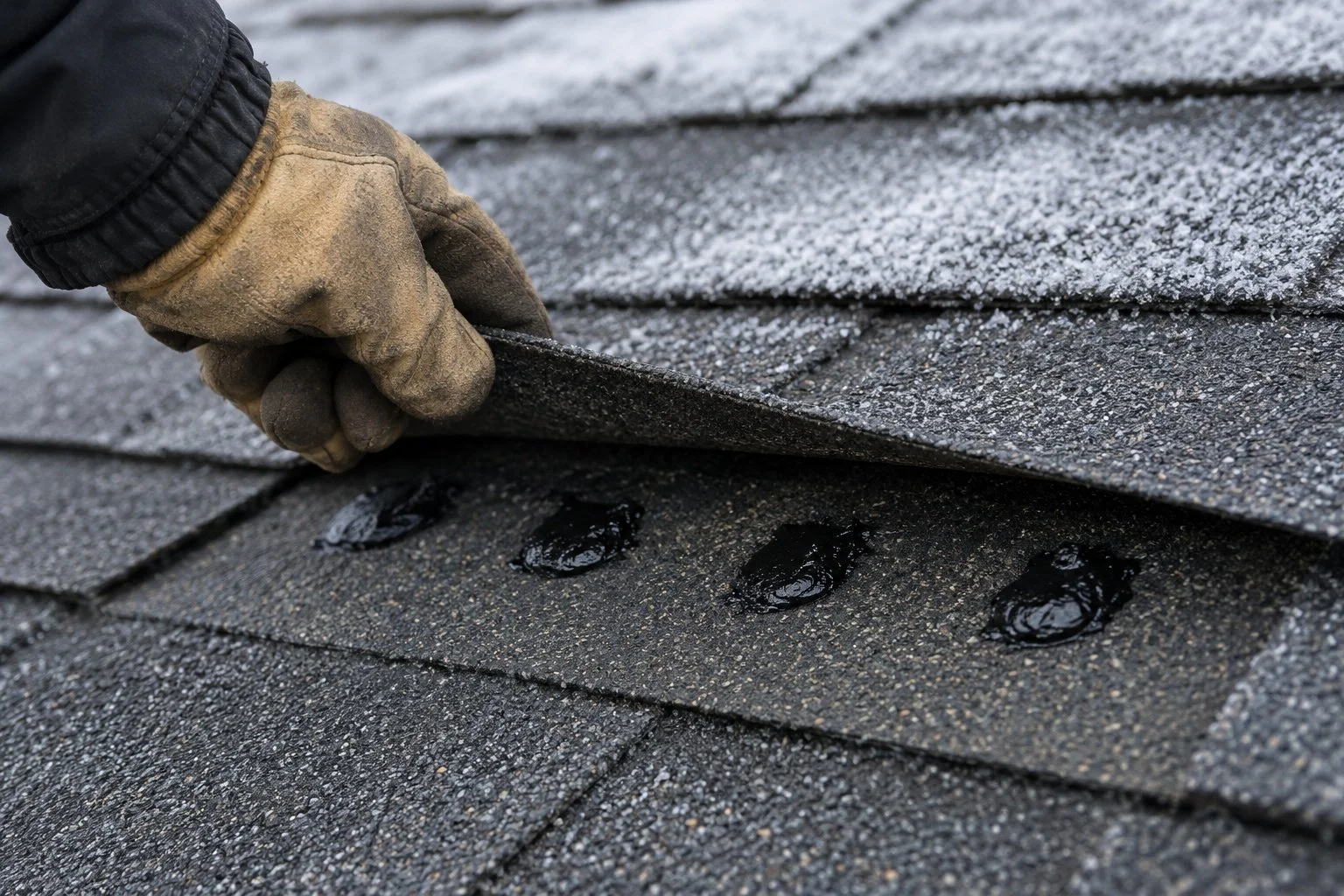
Hand-sealing. When the sealant can’t activate, manufacturers call for hand-sealing: small dabs of asphalt roof cement placed under shingles by hand and pressed into place. It protects against wind until the factory seal takes over, but it’s slow, careful work.
Membranes stick less reliably. Self-adhered layers like ice-and-water shield (the waterproof membrane along the eaves and valleys) bond best to a warm, dry deck.
Short days and snow. December brings the shortest days of the year, and a roof deck has to be clear of snow and frost before anyone can work on it. Each storm adds days to the job.
None of this makes a winter roof impossible. It just means more steps, more time and more weather risk than the same roof in July.
Metal and flat roofs in the cold
Standing seam metal doesn’t depend on a heat-activated seal, so cold affects it less than shingles. Snow, ice and frost on the deck still slow the work and make it less safe.
Flat roofs are a different story. EPDM and TPO membranes (the rubber and thermoplastic sheets used on low-slope roofs) rely on adhesives and seams that need a clean, dry surface and have temperature limits set by the manufacturer. On commercial and municipal buildings, winter flat-roof work usually means patching and protecting what’s there, then planning the full job for warmer weather.
When a winter roof replacement in Maine makes sense
Sometimes a roof can’t wait for spring. In those cases, winter work is the right call, with the extra care cold weather requires.
A winter replacement may make sense when:
A storm or fallen tree has damaged a large part of the roof
The roof is failing in several places and can’t be patched
Leaks are causing ongoing damage inside the home
More often, there’s a middle path. A targeted repair, or temporary protection like a securely fastened tarp over a damaged area, can carry you through to the replacement season. We handle emergency repairs year-round. If a storm is the cause, our guide to storm damage on Maine roofs explains what to check first.
Not sure whether yours can make it to summer? Our post on how long you can wait to replace your roof walks through the signs.
Book in winter, install in summer
Winter is a good time to plan your new roof, even if the work happens in June. The late May to early October window fills up, and getting your estimate early gives you more choice of dates.
While the snow flies, you can:
Schedule our free inspection and estimate visit, weather permitting
Compare materials and look at samples
Review your estimate line by line and ask questions
Sort out financing and set a budget
Our guide to the best time to replace a roof in Maine explains why summer is the sweet spot. For budgeting, see what a roof replacement costs in Maine.
Frequently asked questions
What temperature is too cold to install shingles?
There’s no single cutoff, but 40°F is the line where things change. At or below that temperature, Owens Corning recommends extra steps like hand-sealing, because the shingles’ sealant strip may not activate until warmer weather. Planned replacements go best in the late May to early October window.
Can you tarp a roof to get through the winter?
Yes, as a short-term fix. A properly secured tarp can keep water out of a damaged area until a permanent repair or replacement is possible. It isn’t meant to last for months, so plan the real fix as soon as the weather allows.
Do you do roof repairs in the winter?
Yes. We handle emergency repairs year-round, including storm damage and active leaks. Repairs that can safely wait are usually easier and longer-lasting in warmer weather.
Is winter a good time to get a roofing estimate?
It’s one of the best times. Our inspection and estimate visit is free, and booking in winter means you’ll have your number and your spot before the busy season starts.
Planning around a Maine winter
Most roofs are best replaced in the warm months, but you don’t have to wait until then to start planning. If you have questions about your roof this winter, we’d be happy to talk it through. Reach out here or give us a call at (207) 200-1053.