
Roof Replacement vs. Roof Repair
You’ve got a roof problem. Maybe it’s a leak that showed up after the last storm. Maybe you’ve been watching your shingles curl for a couple of years and you’re wondering if you’ve run out of time. Either way, you’re facing the question every homeowner eventually asks: do I need a full roof replacement, or can I get away with a repair?
It’s an important distinction—and an honest answer can save you thousands of dollars in either direction. Pay for a replacement you didn’t need, and you’ve overspent. Put a patch on a roof that’s failing everywhere, and you’re just delaying an inevitable (and more expensive) problem.
Here’s how we think about roof replacement vs. repair for Maine homes—and how you can start figuring out which one you actually need.
When a repair is the right call
A roof repair makes sense when the damage is isolated and the rest of the roof is still in solid condition. Think of it like patching a pair of jeans—if the fabric is still strong everywhere else, fixing the one worn spot is a perfectly smart move.
Here are the situations where a repair is usually the right answer:
A few missing or damaged shingles. Wind can lift and tear individual shingles, especially along edges and ridges. If the damage is limited to a handful of shingles and the surrounding field is intact, a repair can fix this quickly and affordably—often for $300 to $1,000 depending on the scope.
A localized leak with a clear source. Sometimes a leak traces back to one specific failure point—a cracked pipe boot (the rubber seal around a vent pipe), a section of failed flashing around a chimney, or a few shingles that lifted in a storm. If the rest of the roof is doing its job, fixing the source of the leak is all you need.
Your roof is under 15 years old. A relatively young roof with minor damage is almost always a repair candidate. You’ve got years of life left in the overall system—there’s no reason to replace the whole thing for a small problem.
Storm damage to one section. A fallen branch or a concentrated area of hail damage can wreck one slope of a roof while leaving the rest untouched. In these cases, a targeted repair—often covered by your homeowner’s insurance—is usually the right move.
The key question with any repair is: is the rest of the roof healthy enough to justify fixing just this part? If the answer is yes, a repair buys you real time without wasting money on a replacement you don’t need yet.
When it’s time for a replacement
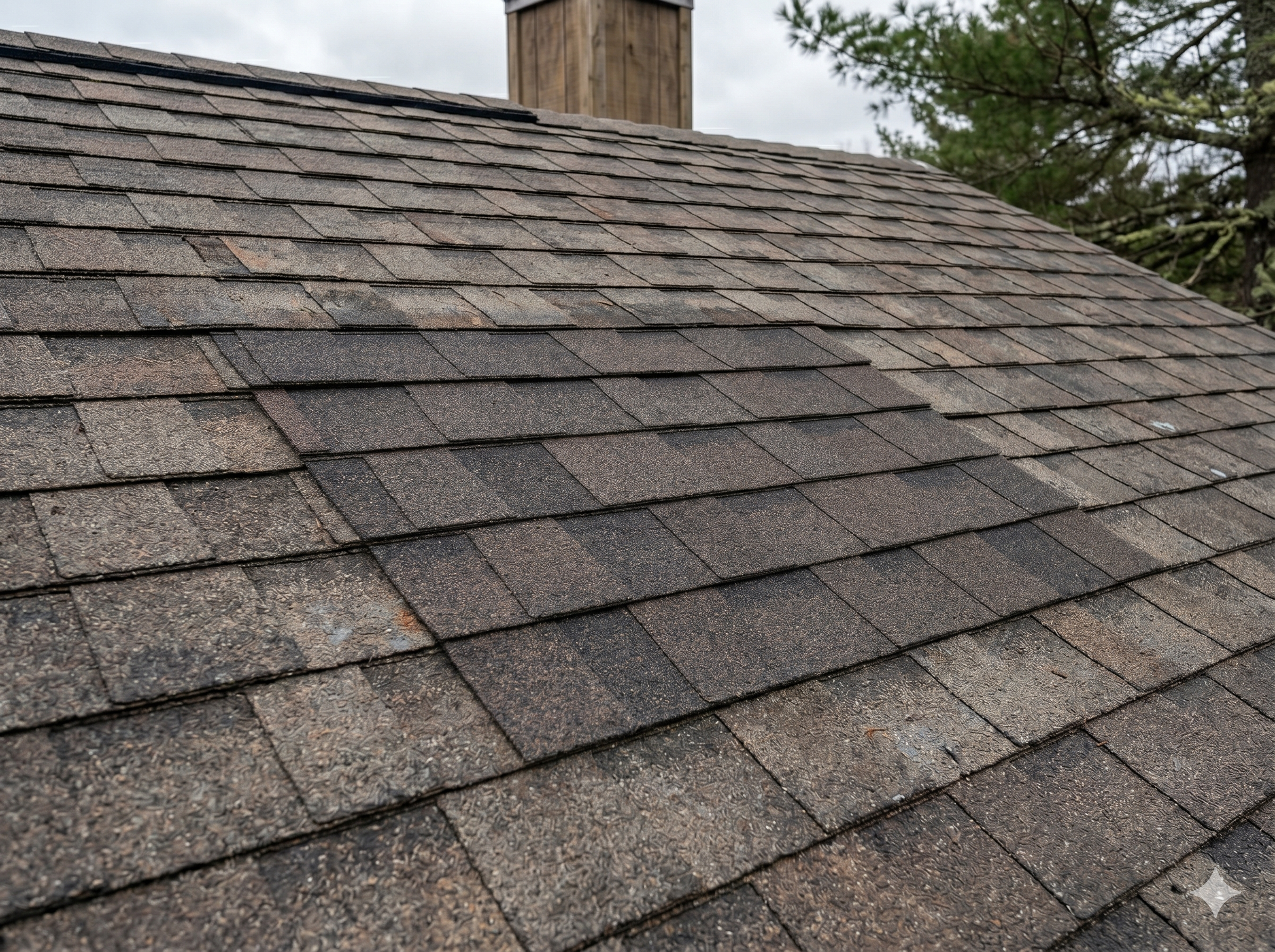
A full roof replacement is the right call when the problems aren’t isolated—they’re systemic. The damage is widespread, the materials are at the end of their life, or the underlying structure has been compromised. Repairing a failing roof is like patching jeans that are worn through everywhere—you’re spending money without solving the problem.
Here are the signs that point toward replacement:
Widespread curling, buckling, or granule loss. When these problems show up across large sections of the roof—not just a few shingles—it means the shingle material itself is failing. Repairs at this point are a short-term fix for a long-term problem.
The roof is 20+ years old. Most asphalt shingle roofs in Maine last 20 to 25 years. If your roof is past 20 and showing wear, the math usually favors replacing it now—before a failure leads to water damage inside your home that costs even more to fix.
Multiple leaks or recurring leaks. One leak with a clear source is a repair. Multiple leaks—or a leak that keeps coming back after being patched—usually means the system as a whole isn’t doing its job anymore.
Sagging or soft spots in the decking. If the plywood decking beneath the shingles has been weakened by moisture, you can’t just put new shingles on top. The decking needs to be replaced in those areas, and once you’re pulling off shingles to replace decking, a full replacement often makes more sense than a patchwork approach.
You’re already spending a lot on repairs. If you’ve had two or three repairs in the last few years and the problems keep coming, you’re likely approaching the cost of a replacement without getting the benefit of one. At some point, it’s smarter to invest in a new roof that comes with a full warranty and resets the clock.
The gray area: when it could go either way
Not every situation falls neatly into “repair” or “replace.” Some of the most common calls we get are from homeowners whose roofs are in that in-between zone—aging and showing wear, but not actively failing. Here’s how we help people think through those decisions:
How much life is left? If a 15-point roof inspection shows that your roof has 3 to 5 more years of serviceable life and the immediate issue is small, a repair makes sense. If it’s borderline and you’re already planning a replacement in the next year or two, it may not be worth spending $800 on a patch.
Are you selling the house? A new roof can be a strong selling point and often adds more to your home’s value than what it costs. If you’re planning to sell in the next couple of years and the roof is near end of life, replacing it now—rather than having it become a negotiation point in the sale—can be a smart financial move.
What’s the cost comparison? We’ll always give you numbers for both options when both are viable. A repair might cost $500 to $2,000. A full replacement typically runs $10,000 to $25,000 for asphalt shingles or $20,000 to $40,000 for metal. Seeing the actual numbers side by side—along with an honest assessment of how long each option will last—usually makes the decision clear.
What does your budget allow? Sometimes the right long-term answer is a replacement, but the right right-now answer is a repair that buys you time to plan and budget. That’s a completely valid choice, and we’ll support it. We also offer 0% interest financing that can make a replacement more manageable if the timing is right.
The point is: there’s no one-size-fits-all answer. What matters is getting an honest assessment from someone who isn’t trying to upsell you. That’s how we approach every inspection—we’ll tell you what we’d do if it were our own house.
How we help you decide
When you call Maine Coast Roofing, here’s what the process looks like:
We start with a conversation. Tell us what you’re seeing. You don’t need to know the technical terms—just describe what’s going on and we’ll take it from there.
Larkin comes out for a 15-point inspection. He’ll check the shingles, flashing (the metal around chimneys and vents), drip edge, valleys, ventilation, decking, and gutters. You’ll get a full picture of where your roof stands—not just the problem you called about.
We give you an honest recommendation. If a repair will solve the problem and give you more years, we’ll say that. If the roof needs to be replaced, we’ll explain why and walk you through your options—materials, timeline, and cost.
You get a detailed written estimate. Whether it’s a repair or a replacement, you’ll receive a clear document with the full scope of work, specific materials, timeline, warranty information, and total cost. No hidden fees, no surprises.
We’ve done this over 300 times across the midcoast and beyond. Every roof is different, but the process is the same: look carefully, be honest, and help you make the best decision for your home.
Frequently asked questions
How much does a roof repair cost vs. a replacement in Maine?
Most roof repairs in Maine range from $300 to $2,000, depending on the scope of work. A full asphalt shingle roof replacement typically costs $10,000 to $25,000, while standing seam metal runs $20,000 to $40,000. The right choice depends on the condition of your overall roof, not just the immediate problem.
Can you repair just part of a roof?
Yes—and it’s common. If damage is limited to one section and the rest of the roof is healthy, a targeted repair is often the smartest move. We’ll match the new shingles as closely as possible to the existing ones, though some color variation is normal as shingles weather over time.
Will my insurance cover a roof repair or replacement?
Insurance typically covers damage from storms, wind, hail, and fallen trees—but not normal wear and aging. If you’ve had storm damage, we’ll provide a full inspection and all the documentation you need for your claim. Clear communication is a priority, especially when you’re dealing with the stress of unexpected damage.
How do I know if my roof is too old to repair?
Age alone doesn’t decide it, but it’s a major factor. If your asphalt roof is past 20 years old and showing widespread wear—curling, heavy granule loss, multiple patched areas—a repair usually isn’t cost-effective. A 15-point roof inspection will give you a clear picture of whether repairing makes sense or whether it’s time to plan for a replacement.
The roof replacement vs. repair decision doesn’t have to be stressful. With the right information and an honest assessment, the answer usually becomes clear. And whether your roof needs a small fix or a fresh start, we’ll make sure you understand exactly what’s going on before any work begins.
If you’re not sure where your roof stands, we’d love to help you figure it out. Give us a call at (207) 200-1053 or reach out for a free estimate whenever you’re ready. No pressure, no upselling—just a straight answer from neighbors who’ve been doing this for nearly two decades.