The Difference Between a Good Roofer and a Great Roofer
Here’s the thing about roofing: from the street, most finished roofs look pretty much the same. Straight lines, clean shingles, no obvious problems. A good roofer can give you that. But a quality roofing contractor — a great one — does things you’ll never see from the driveway. And those invisible details are what determine whether your roof lasts 15 years or 25.
We think about this a lot. Not because we want to talk about how great we are — that’s not really our style. But because we’ve seen what happens when the details get skipped. We’ve climbed onto roofs that were installed just a few years earlier and found shortcuts that were already causing problems. And in Maine’s climate, those shortcuts show up faster than you’d think.
So here’s what actually separates good from great — and why it matters for your home.
The details you can’t see from the driveway
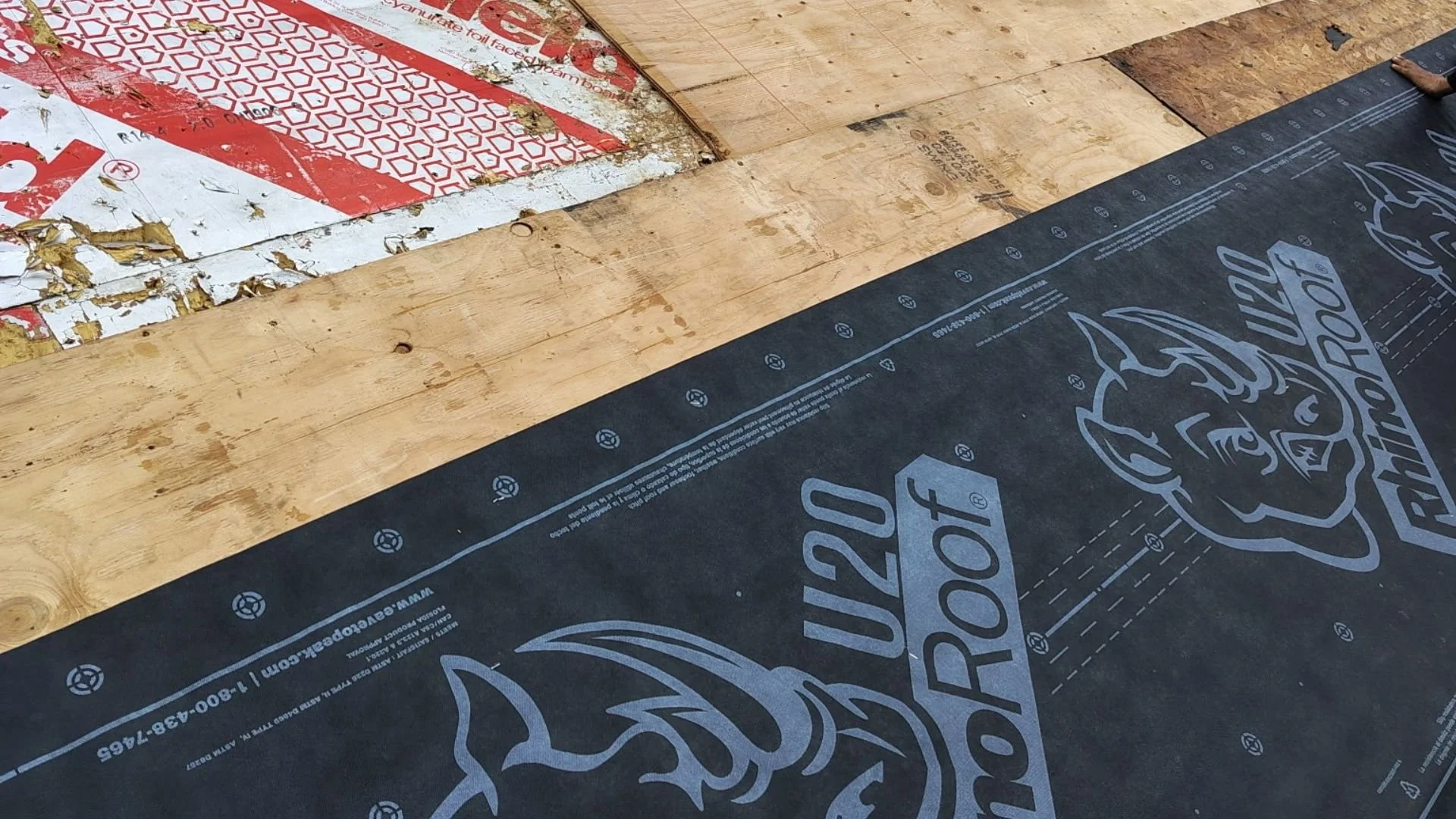
The difference between a good roof and a great one almost never shows up in the shingles themselves. It’s in the layers underneath — the parts that get covered up and forgotten. Here’s where a quality roofing contractor in Maine earns their reputation:
Ice-and-water shield placement. In Maine, ice dams are a fact of life. A great roofer installs ice-and-water shield — a self-adhesive waterproof membrane — along all eaves, in all valleys, and around every penetration (chimneys, vents, skylights). A good roofer might hit the minimum code requirement. A great one goes beyond it, because code minimums weren’t written for a Maine winter.
Flashing work. Flashing is the metal that seals the transitions — where the roof meets a chimney, a wall, a vent pipe, or a valley. It’s one of the most common failure points on any roof, and it’s where craftsmanship matters most. Great flashing is precision-cut, step-woven into the shingle courses, and sealed with the right materials in the right places. Rushed flashing is bent metal slathered with caulk. From the street, you can’t tell the difference. In three years, you can.
Drip edge installation. Drip edge is the metal strip along the eaves and rakes (the sloped edges of your roof) that directs water away from the fascia board and into the gutter. A great roofer installs it flush and straight, with proper overlap at corners and the ice-and-water shield lapping over it at the eave. A roofer cutting corners might skip it entirely on the rake edges, or install it on top of the underlayment instead of under it at the eave. These seem like tiny details. They’re not.
Ventilation. Proper attic ventilation — balanced intake at the soffits and exhaust at the ridge — is critical in Maine. Without it, warm air gets trapped in the attic, melts snow on the roof, and creates ice dams. A great roofer checks the ventilation system during every project and addresses deficiencies. A good roofer installs what’s on the plan and moves on.
Nail placement. Every shingle manufacturer specifies exactly where nails should go — how high from the bottom edge, how many per shingle, and where on the nailing strip. High nails (placed too far up) are one of the most common installation errors, and they’re invisible once the next course is laid. But in a high-wind event, those shingles are the first to lift. It’s a detail you’d never check — but a great roofer never gets wrong.
How they treat your property tells you everything
The technical work matters. But honestly, you can learn just as much about a roofer by watching how they treat your property as by inspecting their flashing.
Do they protect your landscaping? Tarps over foundation plantings, boards protecting walkways, care taken around gardens and fences. Or do they let debris fall where it falls and deal with complaints later?
Do they clean up every day? A great crew leaves your property looking organized at the end of each work day — debris removed, nails swept with a magnetic roller, tools secured. You shouldn’t find roofing nails in your lawn a week later.
Do they communicate? If something unexpected comes up during the project — rotted decking, a ventilation issue, a section of damaged flashing they couldn’t see until the old shingles were off — do they talk to you about it? Or do you find out when the invoice arrives?
Do they do a final walkthrough? A great roofer walks the completed project with you, points out what was done, answers your questions, and makes sure you’re satisfied before they consider the job done. This isn’t just good customer service — it’s accountability.
Leave it better than you found it — these are words we live by. And we mean it about more than just the roof.
Why quality matters more in Maine’s climate
Here’s the reality: in a mild climate, you can get away with a few shortcuts. The weather is forgiving enough that a high nail or a skipped piece of flashing might not cause a problem for years. Maine doesn’t give you that margin.
Freeze-thaw cycles find every gap, every weak seal, every place where water can get in and expand. A detail that a roofer in North Carolina could skip for a decade will fail in Maine in two or three winters.
Ice dams test the entire eave system — the ice-and-water shield, the drip edge, the gutter attachment, the ventilation balance. If any of those pieces were installed carelessly, ice dams will find the weakness.
Coastal wind and salt air stress every fastener, every sealant joint, and every flashing seam. Homes along the coast from Camden to Ellsworth need installation details that account for these conditions — not just standard specs from a manual written for a different climate.
A quality roofing contractor in Maine doesn’t just know how to install a roof. They know how to install a roof for this place — with the details and the care that our weather demands.
What to look for when you’re choosing
You shouldn’t have to become a roofing expert to find a great roofer. But here are a few signals that tell you someone takes their craft seriously:
They explain their process. A great roofer doesn’t just hand you a number. They walk you through what they’re going to do and why — the materials, the installation details, the timeline. If someone can’t or won’t explain their approach, that tells you something.
They’re specific in their estimate. The estimate should name exact materials (not just “shingles” but the manufacturer, product line, and color), list every step of the work, and include warranty details. Vague estimates lead to vague results.
They have manufacturer certifications. Certifications like Owens Corning Preferred Contractor or Brava Preferred Contractor status mean the manufacturer has vetted the installer’s work. It’s not the only signal of quality, but it’s a strong one.
They’re local. A contractor who lives in the community, has a local reputation, and will still be here next year has a different relationship with quality than one who’s passing through. We’re based at 7 Front Street in Belfast. Our name is on every job, and our neighbors see our work every day.
Their reviews mention the experience, not just the roof. When past customers talk about communication, cleanliness, respect for their property, and feeling taken care of — not just “good roof” — that’s the signal of a contractor who cares about the whole experience. Our 4.9-star Google rating reflects exactly that.
Frequently asked questions
How can I tell if a roof was installed well?
From the ground, look for straight, consistent shingle lines, clean flashing around chimneys and vents, a flush drip edge along the eaves, and a tidy ridge cap at the peak. But the most important details — ice-and-water shield placement, nail positioning, underlayment seams — are hidden under the shingles. That’s why choosing a trusted contractor upfront matters more than inspecting the finished product.
Does a more expensive roofer mean better quality?
Not automatically. But a significantly cheaper estimate should raise questions about what’s being left out — steps skipped, materials downgraded, or details that won’t show up until years later. The best approach is to compare estimates line by line, not just the bottom number. A quality roofing contractor will be transparent about what’s included and why.
What’s the most common shortcut bad roofers take?
In our experience, it’s flashing and ice-and-water shield. These are the most labor-intensive parts of the job, and they’re completely hidden once the shingles go on. Cutting corners here saves the installer time but costs you thousands when leaks develop in 3 to 5 years — usually around chimneys, valleys, and eaves.
Why does it matter if my roofer is local to Maine?
Because Maine’s climate requires specific installation details that don’t apply everywhere. A roofer who’s worked through 20 Maine winters knows where ice dams form, how freeze-thaw attacks flashing seams, and why ventilation matters more here than in milder regions. Local experience isn’t a nice-to-have — it’s what keeps your roof performing for decades.
The difference between a good roofer and a great one doesn’t show up in a photo. It shows up in the details underneath the shingles, in how they treat your property, and in whether your roof is still performing perfectly a decade from now. No detail too small — that’s not just a phrase for us. It’s how we approach every project.
If you’re looking for a quality roofing contractor in Maine, we’d love to show you what that looks like. Give us a call at (207) 200-1053 or reach out for a free estimate. We’re right here in Belfast, and we’re happy to answer any questions you have — even the ones about what goes on under the shingles.